I. Introduction
Shandong Province serves as the primary production hub for China’s tire industry, accounting for over half of the nation’s total manufacturing capacity. Based on 2025 enterprise revenue data published by China Rubber, the “2026 Shandong Tire 25 Ranking” reflects the current structural characteristics of the sector. The data indicates that the tire industry has entered a phase of zero-sum competition, with enterprises showing a clear trend toward tier-based segmentation. This article analyzes the revenue scale, production capacity layout, and development pathways of Shandong tire companies, offering a reference framework for procurement professionals and industry analysts.
2026 Shandong Tire Companies 25 Ranking
| Rank | Company | 2025 Revenue | Leading Brands |
|---|---|---|---|
| 1 | Sailun Group | 36.40B | Sailun |
| 2 | Doublestar Group | 28.00B | Doublestar, Kumho |
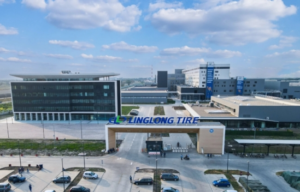
| 3 | Linglong Tire | 24.47B | Linglong, LEAO |
| 4 | Prinx Chengshan | 11.80B | Prinx, Chengshan |
| 5 | Triangle Tire | 9.82B | Triangle |
| 6 | Changfeng Tire | 8.61B | SUNFULL, HIFLY |
| 7 | Jinyu Tire | 8.60B | Jinyu, Black Lion |
| 8 | Sentury Tire | 8.59B | Sentury |
| 9 | Huasheng Rubber | 8.55B | Roadbot, Haiderun |
| 10 | Haohua Tire | 8.44B | Haohua, Huayuntong |
| 11 | Zhengdao Tire | 7.09B | FRONWAY, GRENLANDER |
| 12 | Wanda Boto Tire | 5.68B | WINDA, BOTO |
| 13 | Xiongying Tire Group | 4.49B | THREE-A |
| 14 | Shunfuchang Rubber | 4.41B | Yuwang, SUNFULCESS |
| 15 | Fangxing Rubber | 3.92B | OPALS, Hongying |
| 16 | Yongfeng Tire | 3.50B | CACHLAND, OVATION |
| 17 | Zhongyi Rubber | 3.13B | Leluchi |
| 18 | Yuelong Rubber | 2.64B | Kangnaisi |
| 19 | Superior Rubber | 2.27B | SUPA, Beitechi |
| 20 | Sanli Tire | 2.25B | BEARWAY |
| 21 | Xindalu Rubber | 2.24B | COMFORSER, ROADCRUZA |
| 22 | Xinghongyuan Tire | 1.87B | ANNAITE, HILO |
| 23 | Bayi Rubber | 1.78B | Bayi |
| 24 | Mileqi Tire | 1.74B | DERUIBO, MIRAGE |
| 25 | Fengyuan Tire | 1.56B | FARROAD |
II. Tier 1: Revenue Above 10 Billion RMB
Four enterprises exceeded 10 billion RMB in 2025, forming the first tier: Sailun (36.40B), Doublestar (28.00B), Linglong (24.47B), and Prinx Chengshan (11.80B). All four are publicly listed and operate overseas facilities. Sailun leads the Shandong tire industry in revenue. Doublestar’s growth is supported by Kumho’s overseas operations, which contributed 19.8B. Linglong covers domestic OEM and overseas markets. Prinx Chengshan, a Hong Kong-listed firm, holds its position above the 10-billion threshold. This tier possesses capital market access, global capacity, and established brand channels, offering measurable advantages in resource acquisition and market expansion over smaller rivals.
III. Tier 2: Revenue Between 8 and 10 Billion RMB
Second-tier revenues concentrate in the 8–10B range. Triangle leads at 9.82B, followed by Changfeng, Jinyu, Sentury, Huasheng, and Haohua, with revenues from 8.44B to 8.61B. Revenue gaps are narrow, with differences below 60M RMB between some companies. Raw material costs, overseas orders, and channel strategies influence annual rankings. Changfeng, Jinyu, and Sentury have established overseas production capacity.
IV. Tier 3 and Below: Revenue at or Below 7 Billion RMB
Companies at 7B and below adopt different models. Wanda Boto, Xiongying, Shunfuchang, and Fangxing employ multi-brand strategies, covering various price segments for the global replacement market. Enterprises below 3B are mostly small private manufacturers, heavily reliant on tire export channels, serving niche markets via differentiated products and flexible distribution. This model sustains baseline operations, though scale-driven growth remains difficult, and these firms face higher exposure to trade policy shifts.
V. Core Drivers of Differentiation
Differentiation among Shandong tire companies stems from two factors: global production capacity and capital market access.
On global capacity, Sailun, Doublestar, Linglong, Prinx Chengshan, Changfeng, Jinyu, Sentury, and Shunfuchang have overseas plants operational, while Zhengdao and Haohua are constructing facilities. The remaining 15 firms rely on domestic capacity and traditional exports, making them more vulnerable to international trade policy changes.
On capital access, 6 of the 25 firms are publicly traded (5 on A-shares, 1 in Hong Kong). These maintain direct equity financing for R&D and expansion. The other 19 depend largely on internal cash flow, resulting in varied growth trajectories.
VI. Export Data and Capacity Restructuring
In 2025, national tire export volume rose 2% year-on-year. Shandong tire export value fell 3.3% to 91.7B RMB, with Guangrao (Dongying) down 5.7%. Many tire manufacturers in China are adjusting to new trade dynamics. Anti-dumping duties persist in the US and EU, while Brazil, India, and South Africa have raised tariffs. In response, firms are moving production overseas. Shandong companies accounted for 70% of new overseas tire plants established in China nationally in 2025. From January to April 2026, Shandong tire export value dropped 5.7% year-on-year, with automobile tire exports down 6.3%. These declines correlate with capacity relocation and the phase-out of obsolete domestic lines.
VII. Conclusion
The growth phase of Shandong’s tire industry has ended. The sector now operates under zero-sum competition, with tier structures stabilizing. Differences in capital, global footprint, and business models shape each tier’s opportunities. The consolidation process is expected to continue. Tire company ranking data indicates that resources will likely concentrate further among tier 1 and tier 2 players. For procurement professionals, key supplier evaluation criteria should include overseas capacity, capital structure, and niche market positioning.
TyreSourcing connects you with 200+ verified factories, offering competitive pricing, quality assurance, and end-to-end logistics support. Whether you need any tyre brand or custom solutions, our expert team handles everything from quotation to delivery.